

Souvenirs for Writers: How to Turn Any Summer Adventure into a Travel Journal
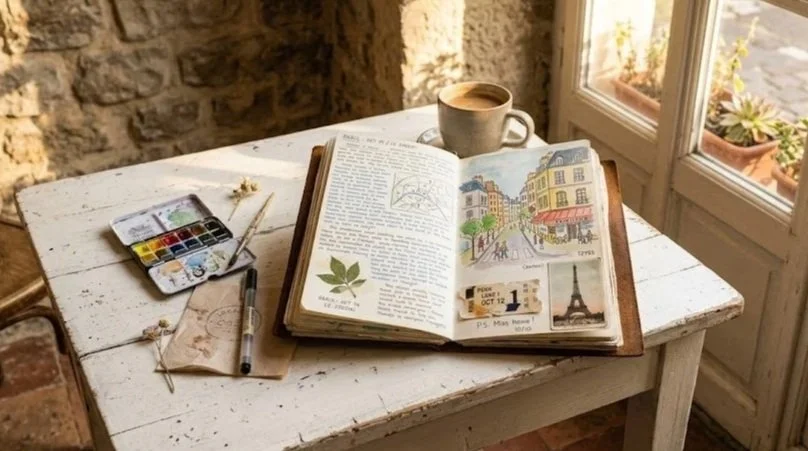
There is a particular kind of notebook that shows up in the bags of artists, writers, and curious travelers the world over. It is not pristine. The pages are thick with dried flower petals and torn ticket stubs. There are coffee rings and smudged pencil sketches. A metro map is folded and tucked into the back pocket. A postcard is taped crookedly to a page beside three sentences written in the margin of a museum. It is messy, layered, and utterly irreplaceable.
This is the travel journal in its truest form, and it is one of the most powerful writing tools a young person can carry.
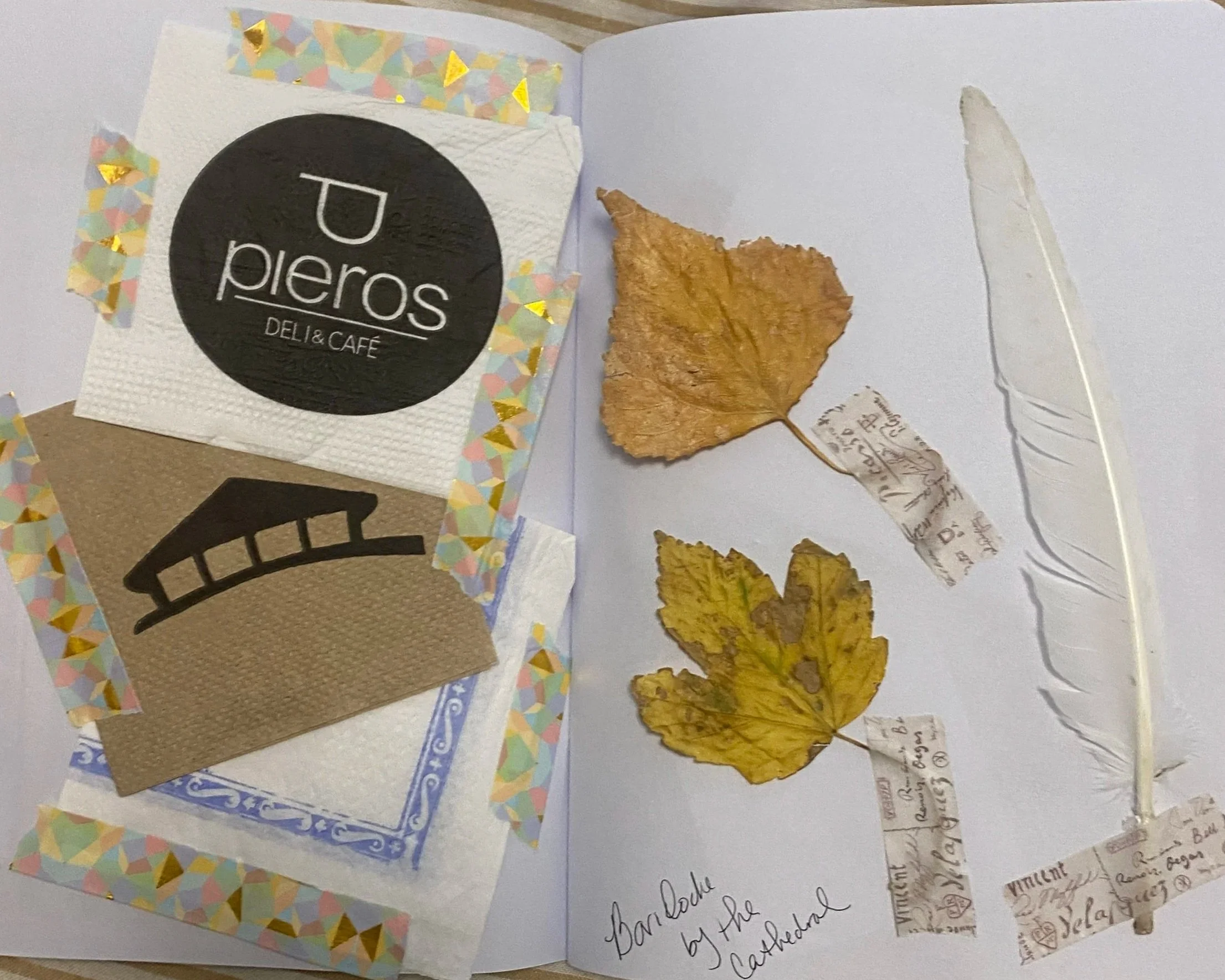
I know this firsthand. I have been living and traveling in Argentina for the past several months, and my own travel journal has become one of my most treasured possessions from this time. The pages are layered with leaves I pressed from the parks in Buenos Aires, ticket stubs from museums and tango shows, postcards from neighborhoods I wanted to remember, and yes, even napkins from restaurants where something particularly wonderful happened at the table. A napkin from a tiny parrilla in Palermo where the waiter insisted I try the provoleta. A paper coaster from a café in San Telmo where I sat for two hours and watched the Sunday market set up around me. These small, ordinary objects tell the story of a place in a way that even my best photographs do not.
At Rose Writing Center, we talk a lot about the connection between observation and writing. Students who notice the world carefully write about it more vividly. Summer travel, whether it means a road trip across three states, a week at the beach, or an afternoon at a city museum two towns over, offers one of the richest opportunities of the year to practice exactly that kind of noticing. The question is not whether your student had an interesting summer. The question is whether they captured it.
A Tradition Worth Knowing
The travel journal has a long and distinguished history. John Singer Sargent, one of the greatest American painters of the nineteenth century, traveled constantly and filled sketchbooks with rapid watercolor studies of Venetian canals, Moroccan markets, and Spanish gardens. These were not finished works. They were a painter's way of paying attention, of recording light, texture, and mood before the moment disappeared.
Writers have always done the same. John Steinbeck kept detailed travel journals that later shaped his nonfiction. Robert Louis Stevenson wrote about his travels through the Cévennes mountains with a donkey named Modestine, turning the simple act of walking and noticing into some of the most vivid travel writing in the English language. Charles Dickens filled notebooks with observations from his American travels, sketches of faces and overheard phrases that found their way into his fiction years later.
What all of these writers shared was the habit of capturing the world before it faded. Memory is imperfect and surprisingly fast. The smell of a particular street, the exact color of the water at a certain hour, the funny thing a stranger said at the next table at lunch… these details dissolve within days if they are not written down. A travel journal is how a writer holds onto them.
I felt this acutely in my first weeks in Buenos Aires. The city has a quality of light in the late afternoon, golden and long and filtered through the jacaranda trees, that I knew I would not be able to conjure from memory alone. So I wrote it down. I pressed a fallen jacaranda flower to the page. And now, months later, I can open the journal and be back on that street corner in an instant.
Any Trip Counts
Before we go any further, it is worth saying this clearly: a travel journal does not require a passport.
A day at a state park counts. A weekend at a grandparent's house counts. A trip to a farmer's market in a town you have never visited counts. What makes something worthy of a travel journal entry is not the distance traveled but the quality of attention brought to it. A student who spends twenty minutes really looking at a tidal pool and then writes three careful sentences about what they saw has done something more valuable than a student who visits five countries and records nothing.
The invitation here is not to have more adventurous summers. It is to pay closer attention to the ones you already have.
What to Bring
The journal itself matters more than people think. A cheap spiral notebook works fine, but a thicker, sturdier journal with pages that can take a bit of glue, watercolor, or pressed leaves will hold up better and feel more like a keepsake. Moleskine makes a classic travel journal. Leuchtturm1917 is beloved by writers and artists alike. For younger students, any hardcover blank notebook from a craft store will do the job beautifully.
Beyond the journal, consider packing a small kit:
A pencil and a fine-tip pen.
Pencil is forgiving for sketching.
Pen is better for writing because it does not smear when things get damp.
A small watercolor set.
The kind that fits in a pocket, with eight or twelve colors, is enough.
Watercolor is the traditional medium of travel sketching for good reason: it dries quickly, travels lightly, and has a quality of light that photographs rarely capture.
A glue stick or small roll of washi tape for attaching found objects to pages.
A small pair of scissors for trimming tickets, maps, and wrappers to size.
A zip bag for collecting flat things before they go into the journal: leaves, receipts, napkin notes, small labels from local shops.
I keep a small zip bag in my purse at all times for exactly this purpose.
By the end of a day out in the city, it usually holds a receipt from a bookshop, a flyer from a gallery, a leaf or two, and whatever else caught my attention.
Sorting through it at the end of the evening and deciding what to put in the journal has become one of my favorite small rituals of this year abroad.
What to Collect
This is where the journal becomes something more than a diary. The materials of a place tell its story in a way that words alone cannot.
Save the ticket stub from the museum. Tape in the paper coaster from the café where you had lunch. Press a flower or a leaf from the garden you walked through. Tear the corner off the map you used and glue it to the page where you wrote about getting lost. Cut the label from a bottle of local olive oil or a bar of soap from the hotel. Keep the napkin from the restaurant where something memorable happened, even if the memorable thing was just a particularly good meal or a conversation that made you laugh.
These small, flat, ordinary objects become extraordinary once they are fixed to a page beside the words and sketches that go with them.
The junk journaling community, which has grown enormously on social media in recent years, has made an art form of exactly this kind of layered, collage-style memory-keeping. The principle is simple: nothing is too small or too ordinary to be worth saving if it meant something in the moment.
How to Write on the Spot
Writing while traveling can feel intimidating to some students because they think they need to produce something polished or complete. They do not.
The most useful travel writing is fast and specific. A few words about what something looked like. A sentence about what something smelled like. A question the place made them wonder about. An overheard fragment of conversation. A list of things noticed in five minutes of sitting still.
Here are a few prompts that work well for in-the-moment travel writing at any age:
What is one thing I see right now that I would not see at home?
What does this place smell like?
What is the loudest thing I can hear?
If I had to describe this place to someone who had never been here, what would I say first?
What surprised me today?
These questions are small enough to answer quickly but specific enough to generate the kind of sensory detail that makes writing come alive. Students who practice answering them in the moment will find that their descriptive writing improves noticeably by fall.
How to Sketch, Even If You Think You Cannot Draw
This is the part that stops most people, and it should not.
Travel sketching is not about producing a beautiful drawing. It is about slowing down and really looking at something. When you try to sketch a doorway or a boat or a pile of fruit at a market stall, you notice things about it that you would never notice if you simply glanced at it or took a photograph. The way the shadow falls. The proportions. The small details that make it specific to this place and no other.
John Singer Sargent's travel watercolors were loose, fast, and sometimes unfinished. They were not made for exhibition. They were made for looking. Your student's sketches can be exactly the same: a quick gesture drawing of a harbor, a rough attempt at the shape of a mountain, a few color swatches to capture what the light looked like at a certain hour. The drawing does not need to be good. It needs to have been made.
For students who are genuinely resistant to sketching, try this: instead of drawing a whole scene, draw just one small thing. A shell. A fork. The handle of a coffee cup. Small, contained subjects are far less intimidating and often more interesting than ambitious landscapes.
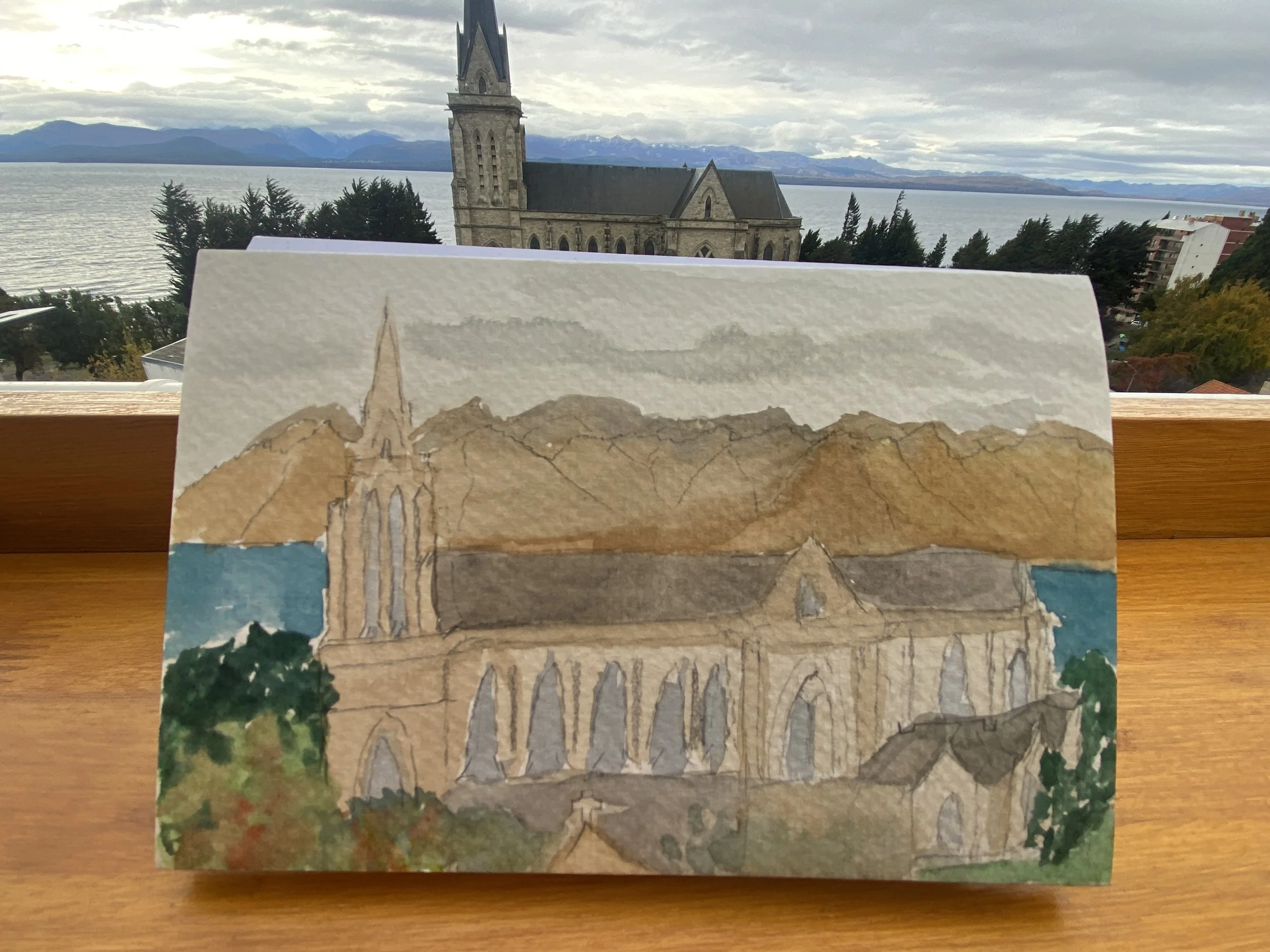
I am not a trained artist by any means, but I have been making small watercolor sketches of doorways and street scenes in my Buenos Aires neighborhood all year. They are imperfect and sometimes barely recognizable. I love them anyway because each one represents a moment of really looking, and because the act of trying to mix the right color for the late-afternoon light on a particular building taught me something about that building that I would not have learned any other way.
Putting It Together
A travel journal does not need to be filled in real time, though it often is. Some of the best entries are written at the end of the day, when there is a quiet moment to look back at the tickets, leaves, and quick notes and turn them into something more. This is the moment when the journal becomes memoir: when the student moves from recording what happened to reflecting on what it meant, what they noticed, what surprised them, what they will remember.
This is also, quietly, one of the most important writing skills there is. The ability to gather raw material and then shape it into a coherent, personal account is exactly what college essays, personal narratives, and literary memoir require. A student who spends a summer keeping a travel journal is practicing that skill every time they sit down with their notebook.
A Note on Making It Beautiful
It is worth saying something about aesthetics, because it matters more than writing teachers sometimes admit. A journal a student finds beautiful to look at is one they will actually use. Spending a little time arranging a page thoughtfully, leaving white space, choosing where to place a ticket stub, mixing a paragraph of writing with a quick sketch and a pressed leaf, teaches a kind of visual composition that complements written craft.
There is no right way for the page to look. The goal is a journal that feels like the place it came from. Messy is fine. Imperfect is fine. A glue smear and a crooked postcard are not mistakes. They are evidence of a summer actually lived.
A Summer Worth Keeping
The adventures your family has this summer will fade faster than you expect. The details go first: the name of the street, the color of the water, the exact shape of the cloud that hung over the mountain at noon. Then the feelings start to soften. What stays, for most of us, is a general impression and a handful of vivid fragments.
A travel journal is how a writer keeps more than a handful. It is how they keep the whole summer, held together with glue and watercolor and careful words, for as long as they want it.
Give your student a notebook, a few supplies, and permission to make something imperfect and wonderful. The writing that comes from it might surprise you both.